























New York City is a fast moving, dynamic place where everything seems to change all at once. But have you ever stopped to consider a longer time frame? What about a geological timeline? The New York that exists under our feet is fascinating and tells a very different story that the one we typically think of.
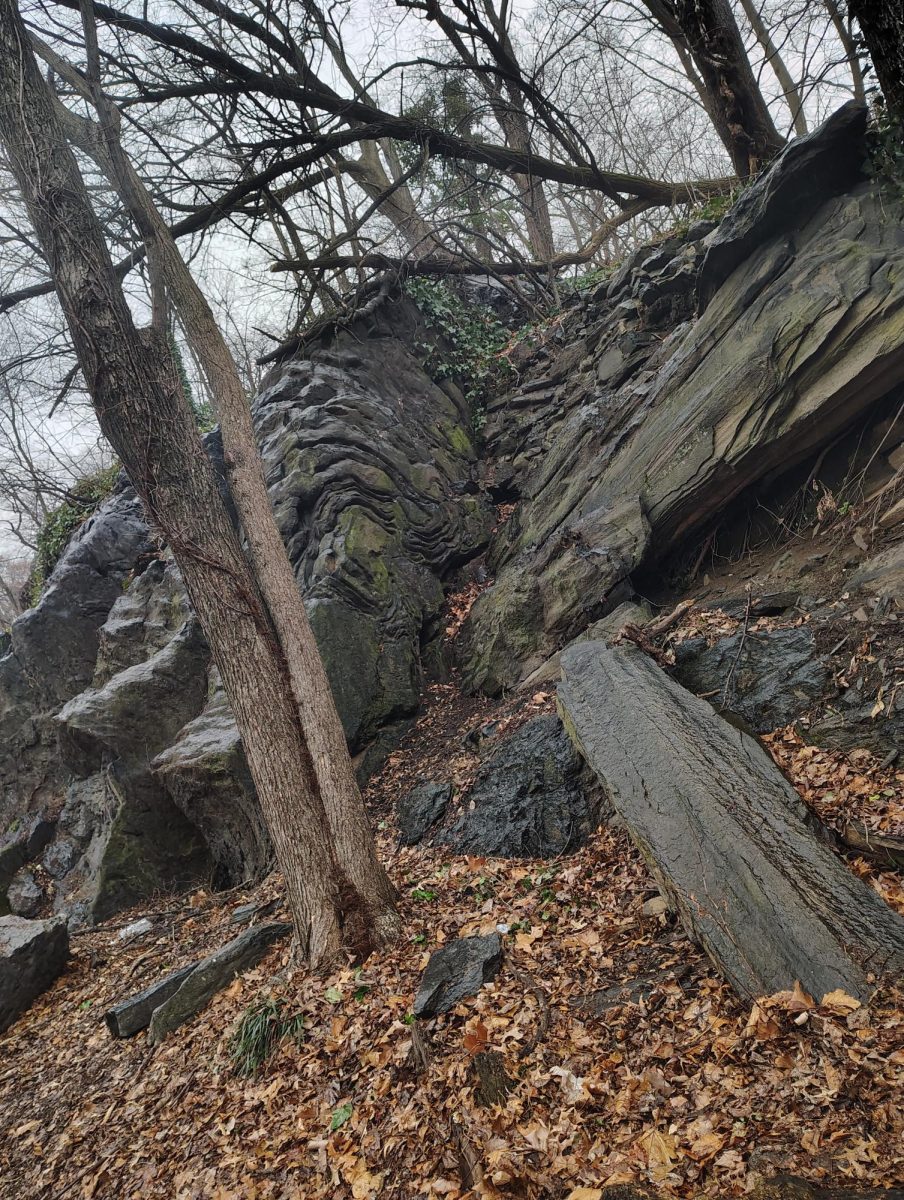
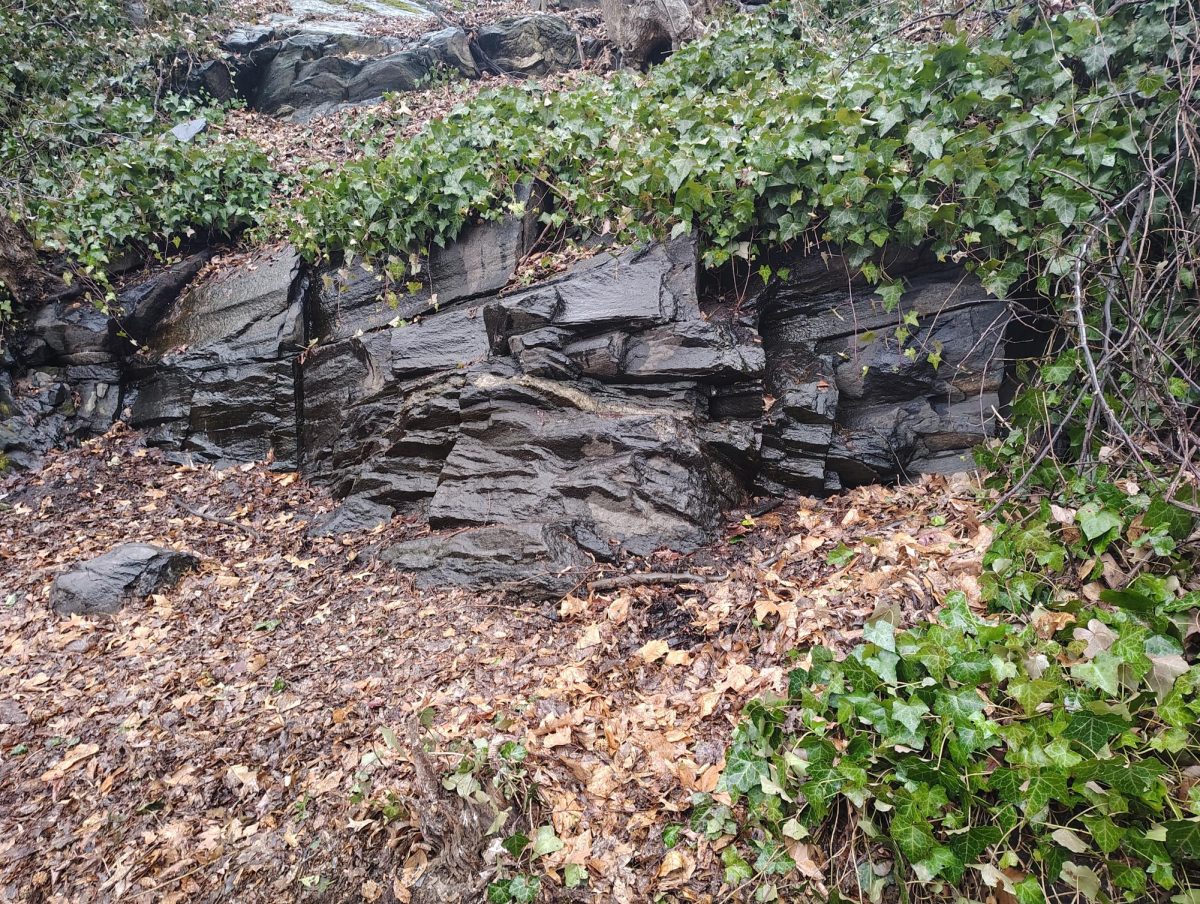
There are many types of rocks and strata that make up Manhattan. Under our feet we might find Manhattan Schist, Inwood Marble, and Fordham Gneiss. Manhattan schist is a metamorphic rock. It was formed about 450 million years ago when continents collided, mushing mountains high into the sky. This was the taconic orogeny. By around 300 million years ago earth’s continents fused into a super content called Pangaea. Inwood Marble is metamorphosed limestone formed around the same time as the Manhattan Schist. Ranging from 150 to 500 feet thick, the marble strata form the bedrock beneath the Harlem River, East River and adjacent regions; the marble strata erupt above ground as a ridge that extends from Dyckman Street on Manhattan’s Upper West Side northward to Marble Hill at Manhattan’s northern tip.
Fordham Gneiss is also a metamorphic rock formed when ancient granite bedrock was subjected to intense heat over a billion years ago during the Grenville Orogeny. Half a billion years later, during the Taconic Orogeny, the granite bedrock was overthrust and interlayered with the schist and marble strata, forming the Manhattan Prong. Fordham Gneiss forms the Riverdale and Grand Concourse ridges in the Bronx.
Central Park and Inwood Hill Park are two of the best places to see outcrops of Manhattan Schist. Central Park is, of course, in the center of Manhattan. Download a map of the park from the Central Park Conservancy (centralparknyc.org). (If you want more information go to new york nature or nature.us.)
I spoke with Mr. Jonathan Egloff, an Earth and Space science teacher here at TCA:
TCA Heights: How can you tell what is the type of rock that is on the list?
Egloff: Alright, so So Manhattan is located on a geologic feature called the Manhattan Prong. Most of the rocks that underlie the Manhattan Prong and make up our bedrock are metamorphic. Manhattan is actually famous for its own type of rock called Manhattan Schist. The schist was formed millions of years ago, deep underneath mountain ranges when two continents were colliding, creating metamorphic rock. So our bedrock is made of metamorphic rock, and you can tell that it’s made of metamorphic rock based off of the foliation, which is kind of the apparent layering, the banded layers of the Manhattan Schist that we see. You can also tell that it’s metamorphic based off of the minerals that are present within the rock itself.
TCA Heights: How does this affect where buildings are made?
Egloff: Alright, so this is really cool. So in Manhattan, we see two distinct groups of skyscrapers. We got skyscrapers mainly in Midtown Manhattan and downtown by South Ferry and Fideye in the Financial District. And those large buildings there are largely there because of the access to bedrock. So tall buildings, they need to have really solid foundations, which means they need to sink those foundations into the bedrock. In areas where the bedrock is the shallowest, it’s the easiest for engineers to build those foundations into the bedrock, making really stable buildings above. There’s also the factor of zoning laws. So while the bedrock does play a large role in where you find the skyscrapers, zoning laws and land use permits also do play a very, very big role in where Manhattan skyscrapers are located. So it’s not just the bedrock.
TCA Heights: Where would you say is the best to see these types of rocks?
Egloff: Alright, so if you want to see some really cool metamorphic rocks, Central Park has a lot of exposed metamorphic rock. You can walk along pretty much any path in Central Park. And if you keep your eyes peeled, you’re going to want to look for dark rock that has kind of a wavy appearance to it. Rat Rock down at the southern end of Central Park is a large exposed section of this metamorphic Manhattan Schist. You can also find some really exposed Manhattan Schist on 125th Street. So there’s a famous geologic feature called the 125th Street Fault, and that allows you to see some of the bedrock that is exposed along the street there. And up in the northern part of Manhattan, up in Inwood and Fort Tryon parks, you can also find exposed Manhattan Schist and other types of bedrock there as well.